Cart (0)
Your cart is empty
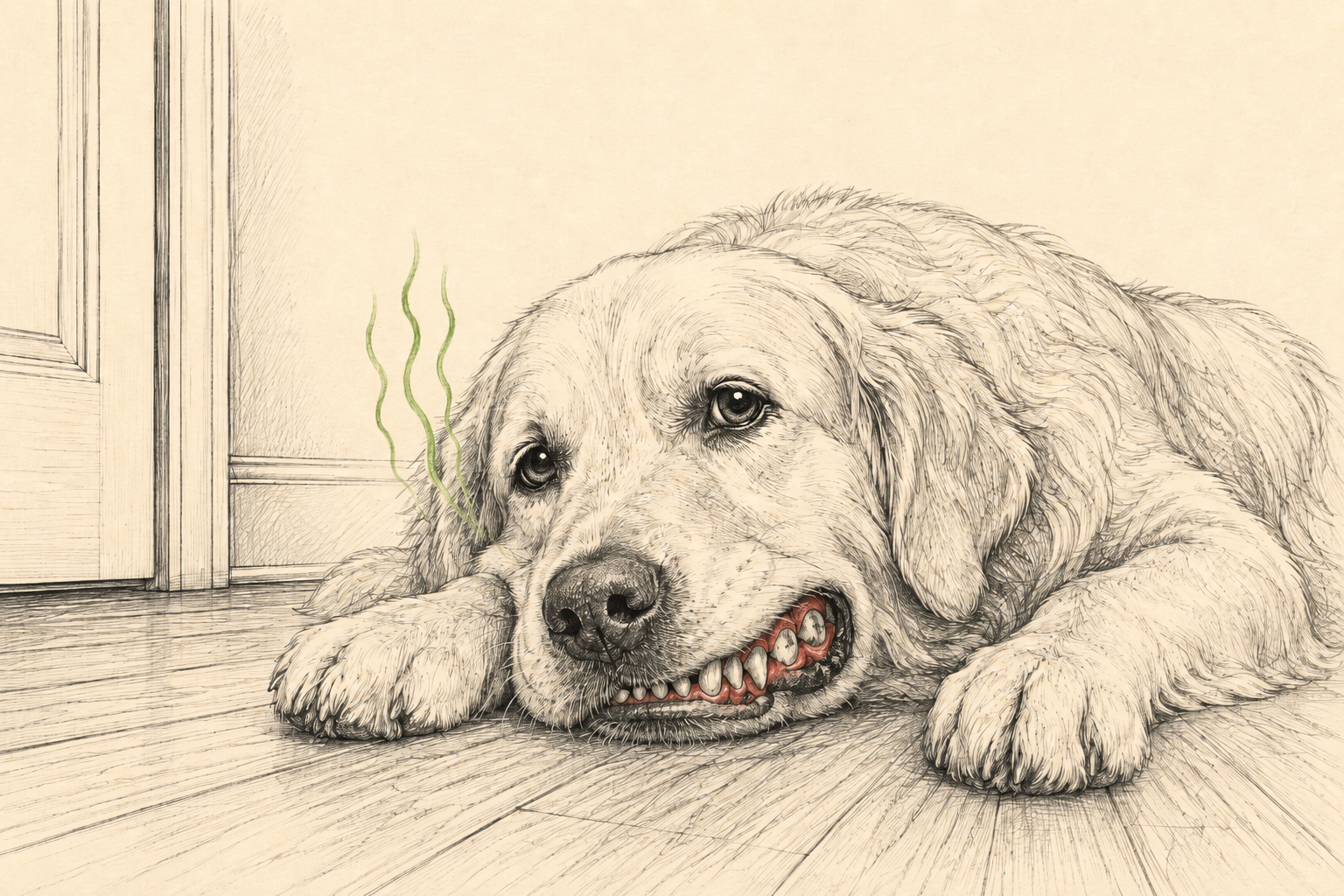
The vet turned the monitor towards me, and in that moment I knew I had betrayed my dog. Not on purpose. Not out of malice. But through something far worse: ignorance I had mistaken for normal.
He pointed the stylus at the kidney. A grey shadow spread across the whole organ like a damp stain on old wallpaper. "Scar tissue," he said. "Bacterial origin. From the mouth."
Then he clicked to the next image. The heart. The mitral valve. "Inflamed. Thickened. It's pumping at seventy percent capacity now. In a year we'll be at fifty percent. Then comes the coughing. Then the fluid in the lungs."
I stared at the screen. My dog is nine. He isn't old. He's my baby. And for years I had banished him from the bedroom at night because his breath smelled like rotten eggs and old blood. I thought that came with age. I thought tartar was cosmetic. I thought a dog that eats and plays was a healthy dog.
"But the teeth don't even look that bad," I heard myself say. The vet set the stylus down. Switched off the machine. "The teeth are just the gateway, Mrs Whitfield. This is what came through the gateway. And you don't see it. Until it's too late."
In veterinary medicine, it's called periodontal load. Most dog owners call it "bad breath." Both describe the same phenomenon — except one term names a disease, and the other demotes it to an annoying side effect.
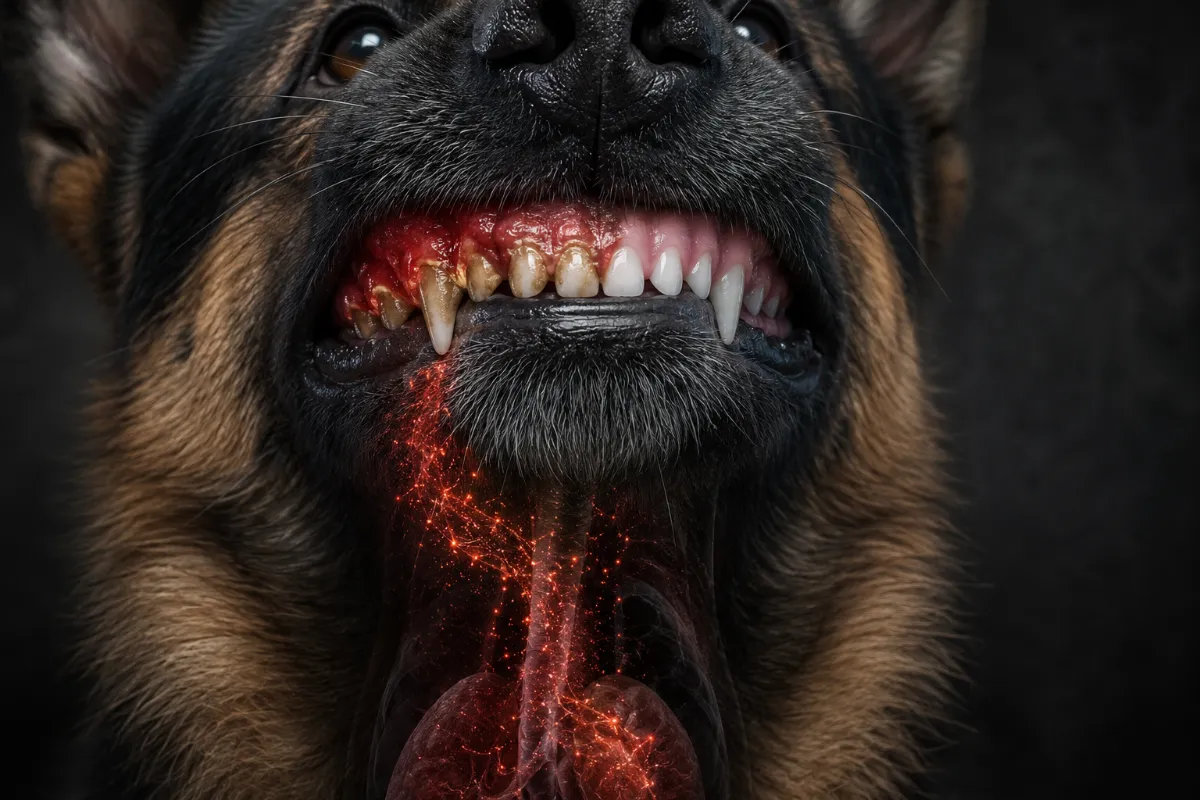
What was on the monitor was the result of a journey. A journey that happens every single day while the dog eats, drinks, sleeps, plays. Bacteria — mainly Porphyromonas gulae — have built a protective layer under his gumline. A grey, slimy fortress that in technical jargon is called a "bacterial shield," or biofilm. It sticks tighter than tartar. It's alive. And it produces toxins that dissolve the gums, attack the bone, and eventually enter the fine blood vessels.
From there, it's a short trip. The bloodstream carries them to the kidneys. There they nest in the fine filters and leave scar tissue behind. They travel to the heart, settle on the valves, inflame them. They burden the liver, which tries to filter the toxins now circulating through the body every hour.
The dog shows nothing. He keeps eating. He keeps playing. Because dogs learned 30,000 years ago to swallow pain. In the wild, weakness means death. So he smiles — with cracked teeth, inflamed gums, organs quietly rotting inside.
And we mistake his silence for health. "But he's still eating." "He's not whining." "He's just an older dog." Those are the sentences you hear — right before the monitor gets turned towards you for the first time.
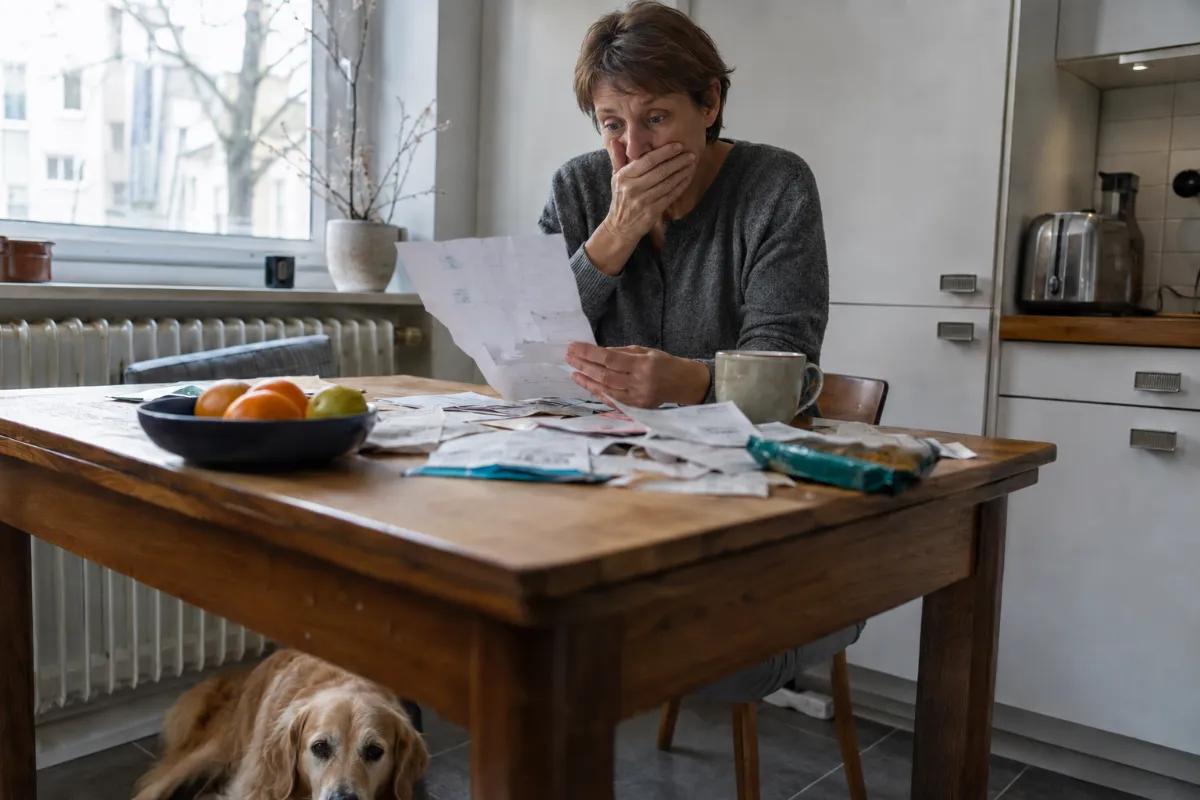
Let's do a different kind of maths. Not the medical one. The financial one. Because it hides behind what we dismiss every day as "normal dog ownership."
Year one: the toothbrush he refuses. The special paste. The dental sticks he swallows whole in twenty seconds. The water additives sitting in the bowl for months with no visible effect. Cost: around €600. Result: the brown film keeps growing.
Year two: the first professional cleaning under general anaesthetic. €1,100. The form you sign stating the dog bears the anaesthetic risk. The three days afterwards where he's not himself, won't eat, has a distant look in his eyes. Cost: €1,100. Result: after six months the film is back, because the bacterial shield under the gumline was never touched.
Years three to five: the second anaesthetic. The third. The first extraction, because a tooth is so loose it wobbles when chewing. The antibiotics afterwards. The follow-up checkups. Cost: €3,200 and more. Result: kidney values rise. The heart valve thickens. The breath stays.
Total cost after five years: over €5,000. For a problem that was never solved. For a hamster wheel the owner runs on while the industry profits. Because that's exactly how the system is built. The dental-stick industry survives on tartar coming back. The anaesthetic-cleaning industry survives on the bacterial shield staying intact. It's the perfect business model: create a problem, sell half a solution, then repeat.
How the problem was invented
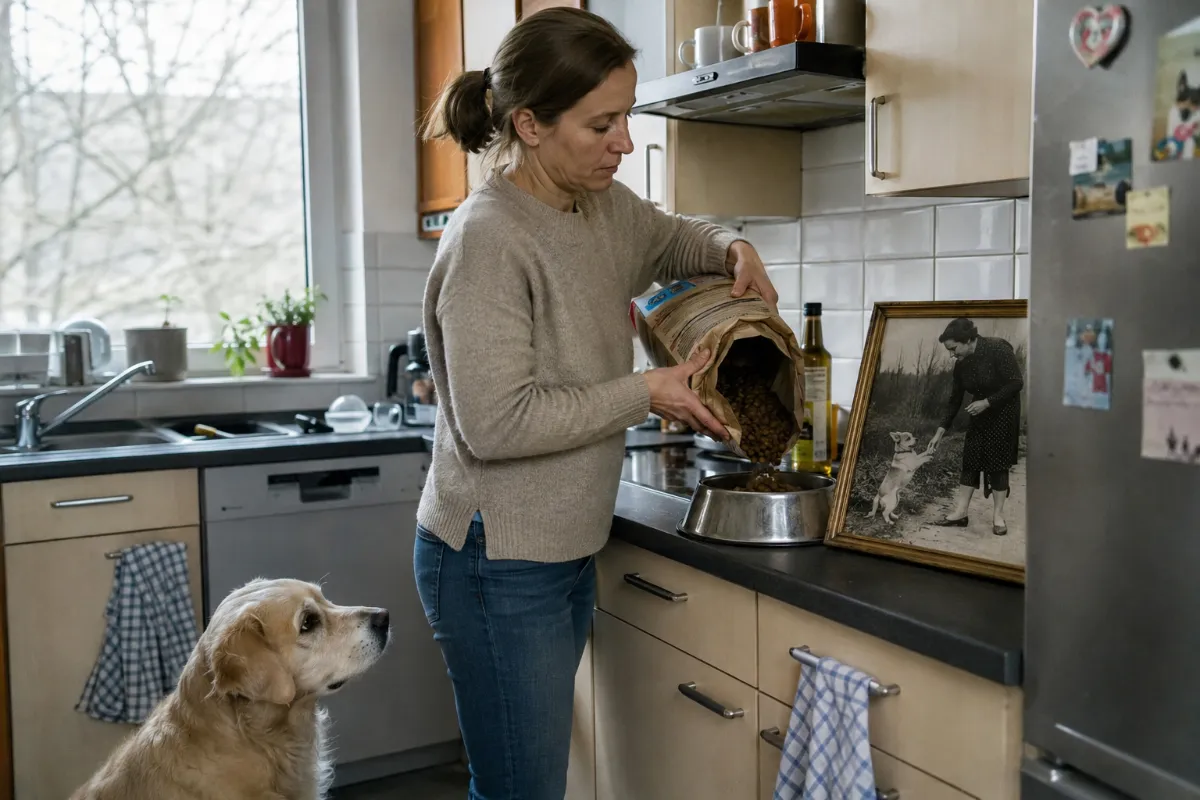
To understand why all this happens, you have to look back. Seventy years back. Before kibble. Wolves don't have dental problems. Working dogs before 1950 had virtually no periodontitis. My grandmother had a dachshund that was still tearing apart raw bones at sixteen. White teeth. No bad breath. No anaesthetic.
Then came kibble. Soft. Sticky. High in carbs. A food that clings to teeth like caramel and feeds a bacterial army that didn't exist before. The pet food industry invented a problem and sold us the solution at the same time: dental sticks. Sugar. Water additives. A billion-euro market that survives on our dogs staying sick.
The vet stands outside this system, yet is trapped inside it. Fifteen minutes per appointment. No time for the story of the bacterial shield. No time to explain why grandmother's dog was healthier than ours. All he can do is write the prescription for the next anaesthetic.
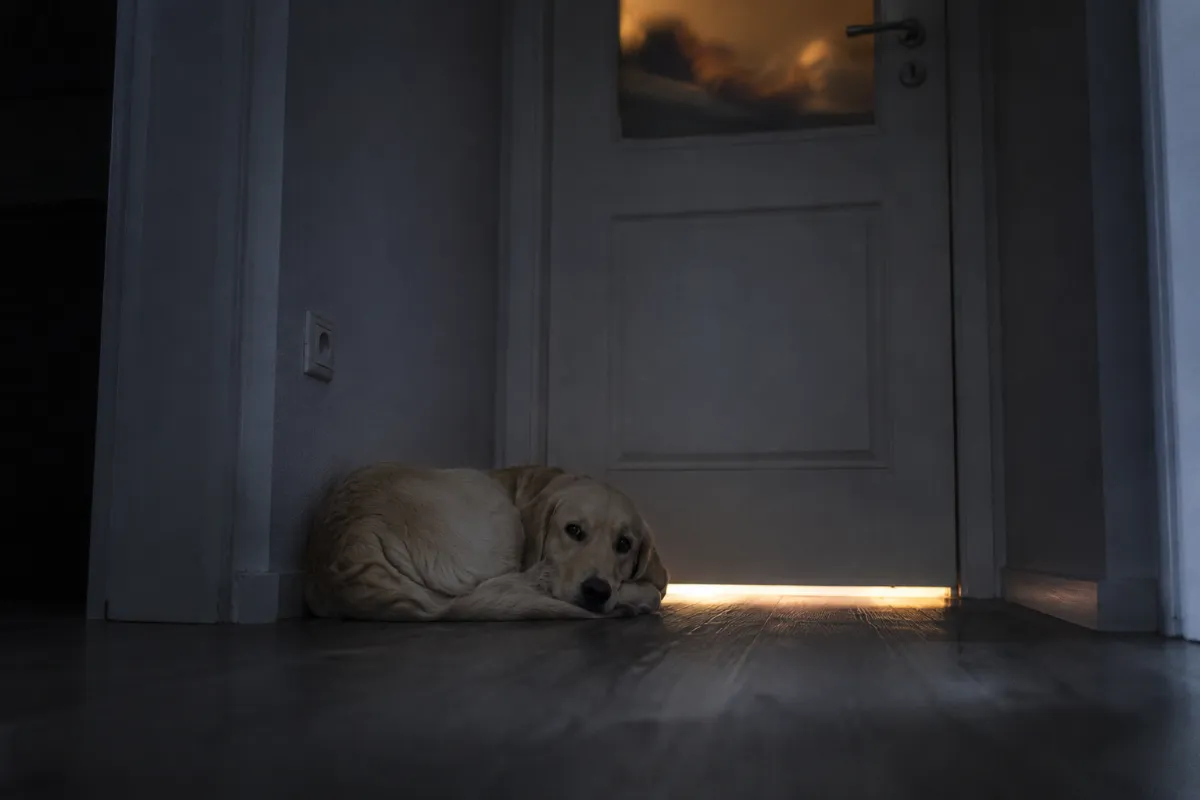
And the breeder? The breeder says nothing. Because they often don't know either. Because dental hygiene is a footnote in breeder training. Because nobody tells the puppy buyer: "Careful — in nine years, bacteria from your dog's mouth will be attacking his kidneys." Nobody says that. So we don't know. So we close the door at night.
A British brand has solved exactly this problem.
The toothbrush is the first war. The dog bites, scratches, flees under the sofa. After three weeks the owner surrenders — not out of laziness, but from the feeling of hurting the animal. The relationship suffers. The routine dies. The tartar stays.
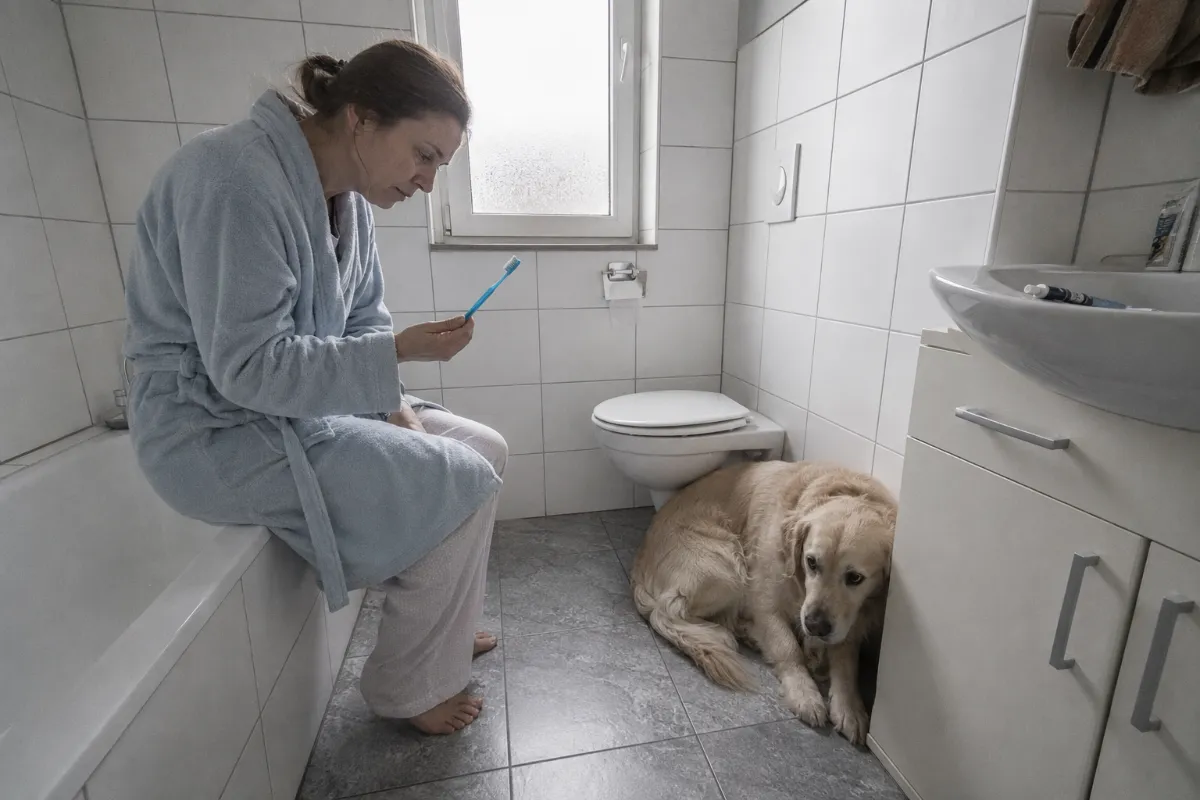
Dental sticks are the second betrayal. Sugary. Soft. They never touch the molars, where eighty percent of the disease begins. The dog swallows them in seconds. The owner buys more every month. €28. €33. A quiet subscription that adds up over the years and changes nothing.
Water additives are the third consolation. They smell medicinal, taste chemical. Some dogs drink less because of them. Their effectiveness is unproven. But they're easy. And because they're easy, we keep buying them. Month after month.
General anaesthetic is the most expensive illusion. €1,100 and up. The risk climbs every year. The vet removes the visible tartar, polishes the surface. But the bacterial shield under the gumline stays untouched. Within twenty-four hours it starts producing new tartar. After six months, everything is back. And the owner is staring at the next bill.
We scratch the surface. We put them under for what we can see. But we never solve what actually kills.
The only solution that follows the shield
If scratching doesn't help. If anaesthetic doesn't help. If feeding doesn't help — what's left? The answer isn't more mechanics. It's biology. The bacterial shield can't be brushed away. It's a living armour. It has to be dissolved biologically. That takes three things working together — combined into a single, directly applicable active complex.
First: bacterial elimination. A highly concentrated green tea extract penetrates the shield and eliminates the harmful microorganisms at the root. Not on the surface. Not diluted. Right where they live.
Second: tissue regeneration. A specialised grapefruit extract heals the damaged gums. Stops the inflammation process. Supports the natural renewal of gum tissue. Pink instead of red. Firm instead of loose.
Third: environmental protection. Citric acid corrects the pH level in the mouth with precision. Bacteria need an alkaline environment. The pH adjustment turns the mouth into an uninhabitable zone for new colonies. Protection that lasts.
This triple-action formula isn't new. It's been known in plant-based research for decades. But it was never available in a form a dog owner could apply directly — no injection, no anaesthetic, no daily battle in the bathroom. Until now.
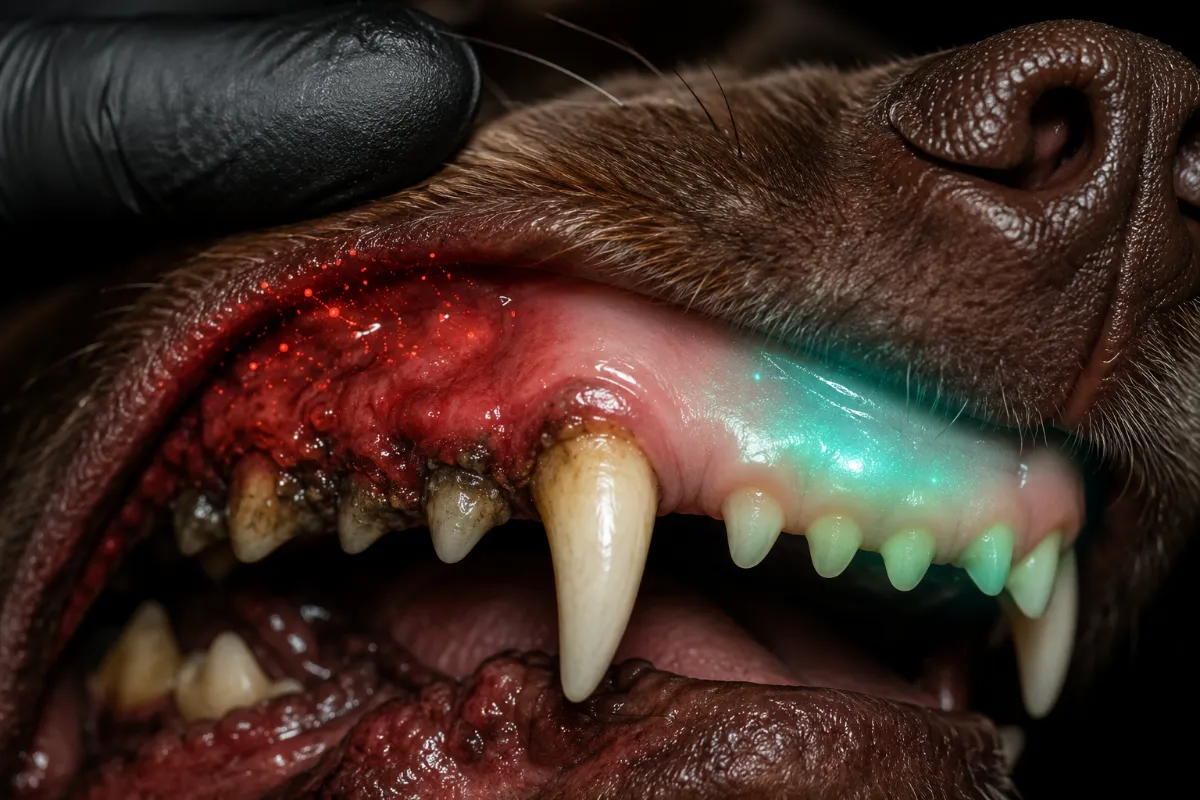
What came out of it is called ToothWipe. An intensive dental care wipe with a textured surface that mechanically breaks up the bacterial shield while transferring the biological active complex directly onto the gums.
The routine takes thirty seconds, once a day. Gently lift the dog's lip. One wipe along the upper row of teeth. One wipe along the lower row. Done. No scratching. No forcing. No look that says, "I trusted you, and you're hurting me."
One tub holds 50 wipes. That's fifty days of care — and the reason most owners take three at once: five months, handled, without thinking about it again.
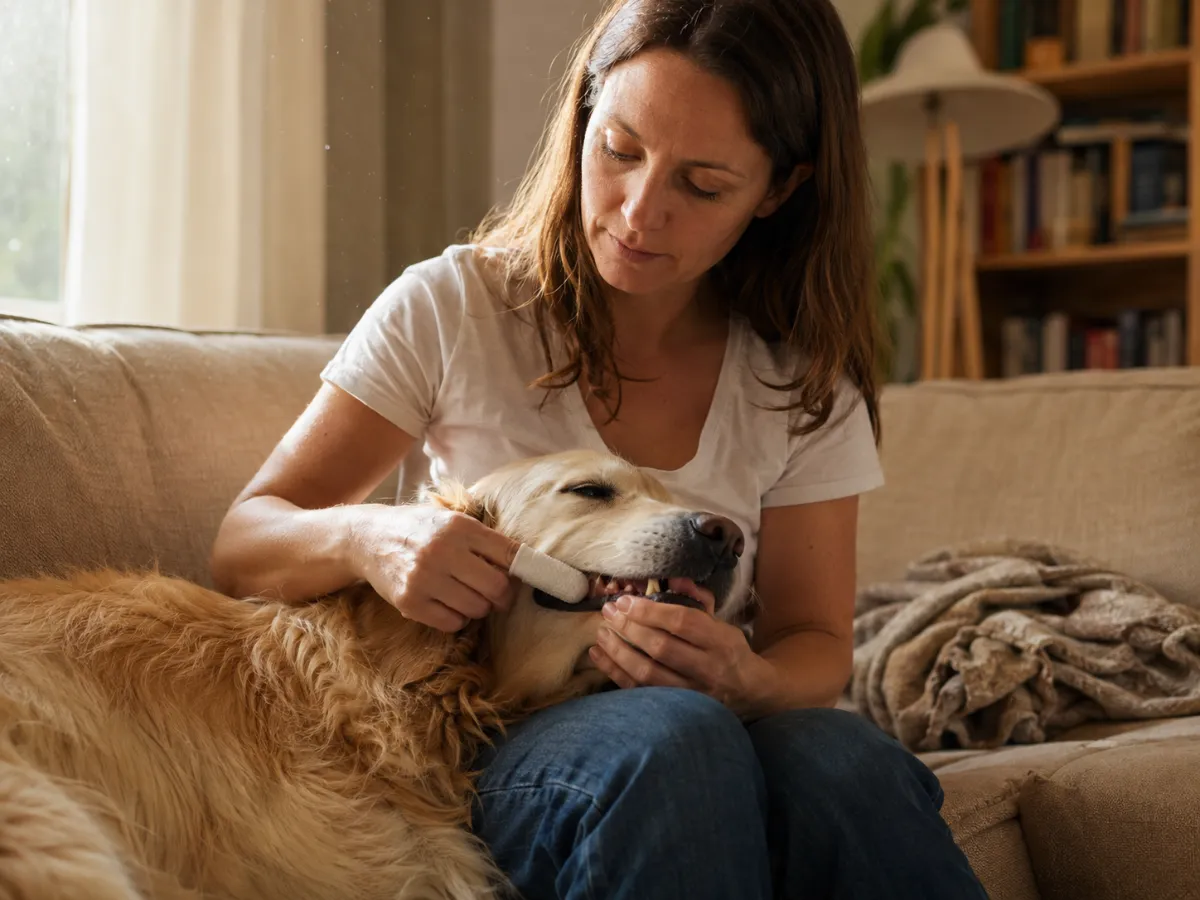
The taste is mild. Neutral. For the dog it feels like petting, not treatment. For the owner it means: no more anaesthetic bills. No more guilty conscience. No more closed bedroom door.
We followed forty dogs with documented periodontal load over an eight-week period. Thirty-four of them showed visible improvement. Gums that went from deep red back to healthy pink. Tartar that turned brittle and soft. Breath that normalised.
Rachel M., 62, from Bristol, was one of them: "At the check-up, my vet asked if I'd had a professional cleaning done somewhere else. I pulled the wipe out of my bag. He took a photo of it."
What the decision means today
A single anaesthetic cleaning costs €1,100 and up. It comes back. Every time. Because it doesn't solve the problem, it only removes the visible symptom. ToothWipe costs a fraction of that. And it works daily. Straight at the cause.
Only for readers of this article, an introductory saving is available on the linked page. How much? Enough that the decision doesn't feel like another purchase, but like the first instalment of relief.
On top of that, you get the 3 vet guides free — bad breath, gums, routine. With photos showing you how to check yourself whether the bacterial shield is still active or already retreating.
And because trust is everything in this category: a 90-day trial period. Not 7. Not 14. 90 days. If the gums don't visibly calm down, if the breath doesn't get milder, if the vet doesn't ask what you're doing — you get every cent back. No form. No discussion.
Production runs in small, fresh batches, since the plant-based active ingredients only hold their full potency for a limited time. Once the current stock allocated to this editorial piece runs out, the saving ends too.
Path A: you follow the link. You order. Within 6 to 10 working days you're holding the package. In eight weeks your vet asks what happened.
Path B: you close this article. You keep buying sticks. You keep signing anaesthetic forms. You keep closing the door at night. And eventually the vet turns the monitor towards you again.
My dog sleeps in my bedroom again. His breath no longer smells like decay. It smells like what he is: a healthy dog with many years still ahead of him.
Make your decision.
Within 6 to 10 working days you're holding the package.
A 90-day trial period. Not 7. Not 14.
If the gums don't visibly calm down, you get every cent back. No form. No discussion.
Production runs in small, fresh batches. Once the current stock allocated to this editorial piece runs out, the saving ends too.
In eight weeks your vet asks what happened.
P.S. The vet who showed me the kidney readings ordered it himself two weeks ago. For his own Labrador. Sometimes the system only breaks once it's personally affected.

P.P.S. The current batch for Kovah readers is limited. Once the stock for this article runs out, the linked page will close. This article will then just be instructions for something you can no longer get.
P.P.P.S. Right now you also get the 3 vet guides free — a visual guide that lets owners check for themselves whether the bacterial shield is still active or already retreating.